Knowledge Has a Life
What happens to knowledge when it is no longer transmitted?
Knowledge is not an archive, for us it is:
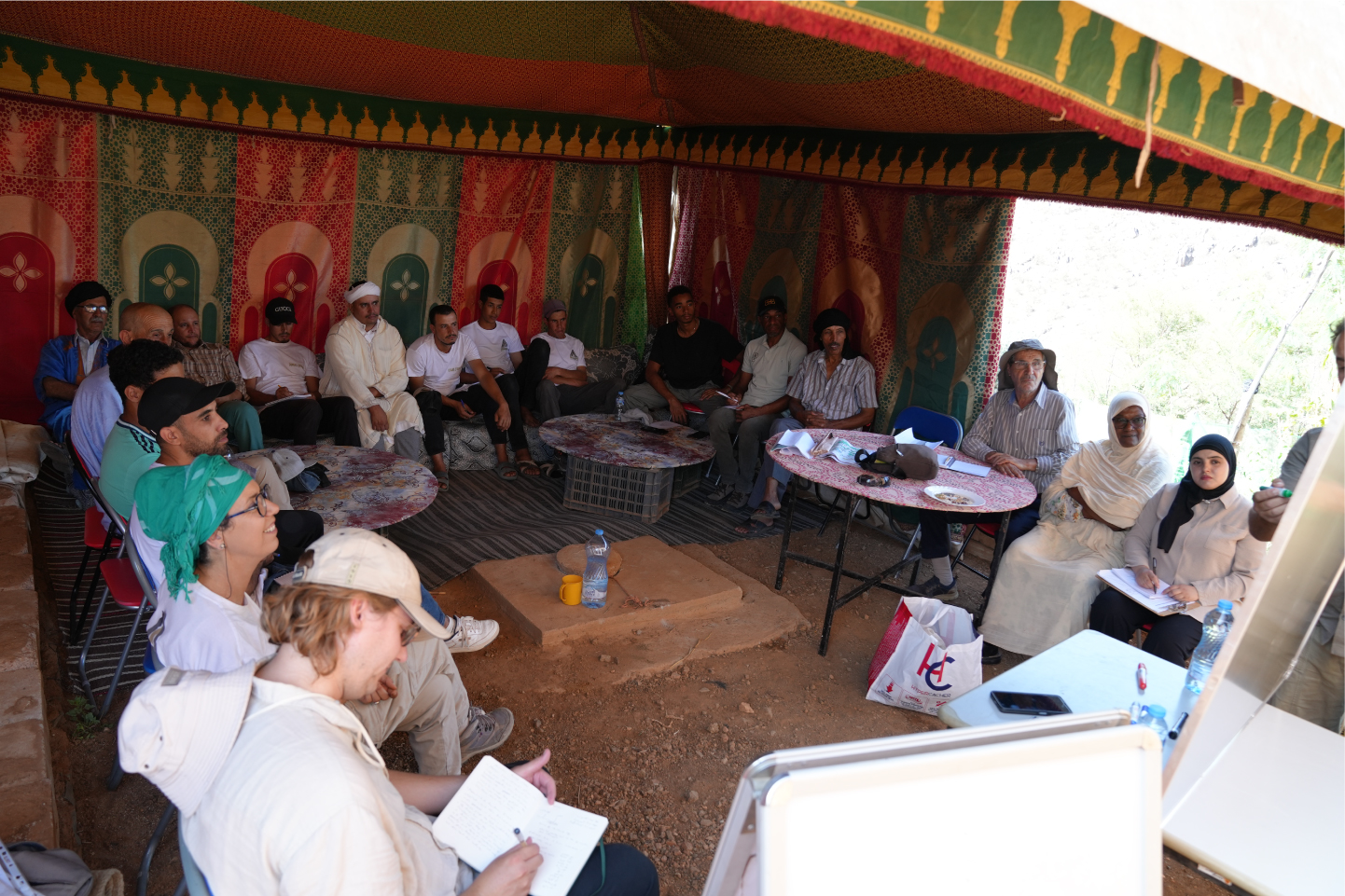
Knowledge lives because someone carries it forward, and yet every generation changes what it receives. And it is at this juncture exactly where Dar Si Hmad’s Tinmel begins.
The Territory Is the Classroom
Learning begins with where we are.
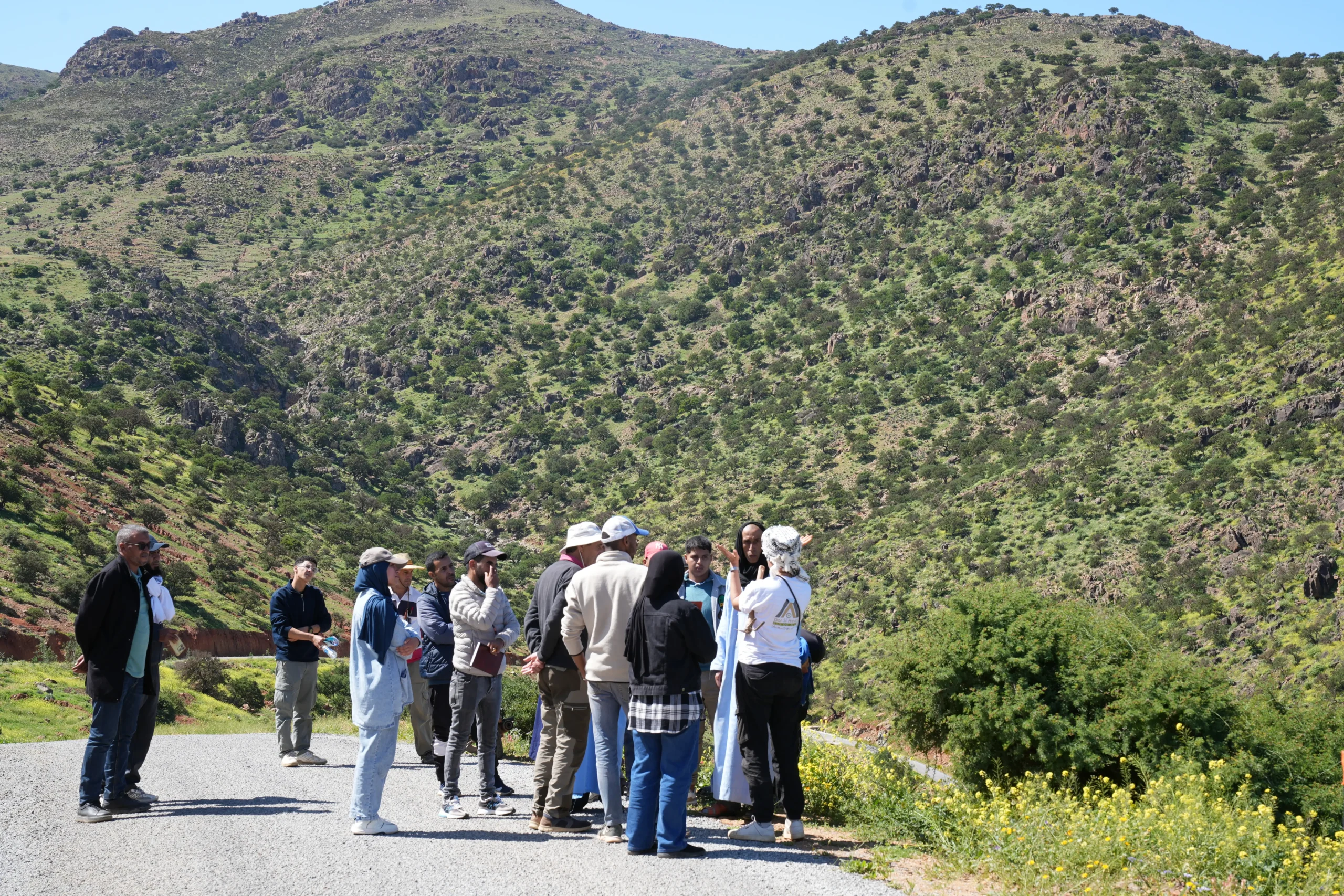
The Anti-Atlas is not simply the geographical setting for Dar Si Hmad's programmes. It is one of their teachers.
Water, fog, soil, seeds, plants, agriculture, biodiversity and climate become subjects of inquiry.
We do not teach people about the territory from a distance. We learn by entering into relationships with it.
When Knowledge Meets Knowledge
No single way of knowing is enough.
Tinmel creates spaces where these forms of knowledge can meet—not to freeze inherited knowledge in the past, nor to replace it with something called “modernity,” but to ask what becomes possible when they enter into conversation.
The Experiment
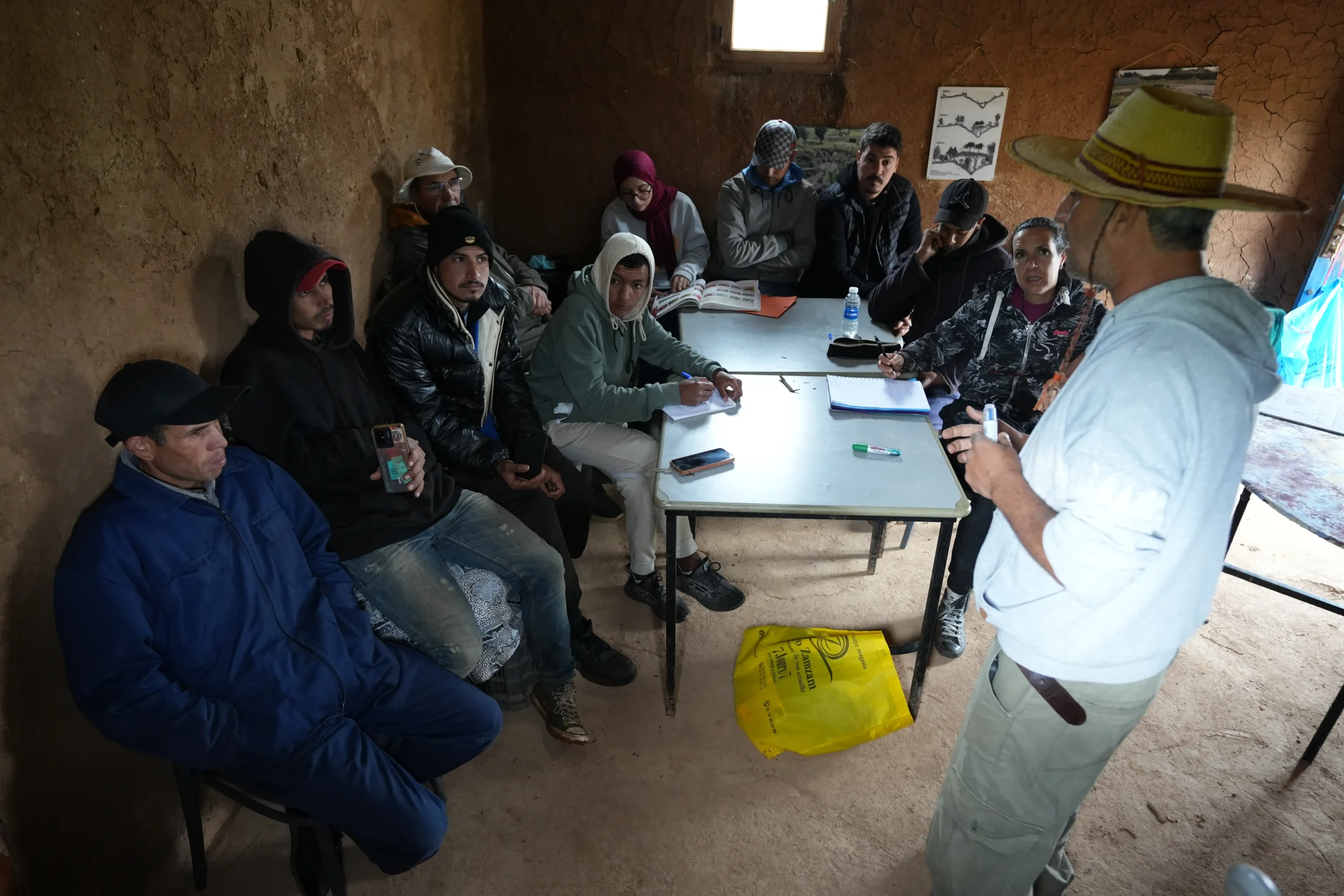
Learning is also making, testing, failing and trying again.
Meet our experiments in learning.
Knowledge becomes practice, and practice produces new knowledge.
Here is what this looks like when it happens.

THE WATER SCHOOL
When the landscape becomes a teacher.
Children learned about water because water was already part of their lives.
The fog project gave them an extraordinary starting point: water that had arrived from the atmosphere, through the mountain, through the nets, and into their homes.
The curriculum then opened outward — from water to ecosystems, science, conservation and responsibility.
It is one story of Tinmel, not Tinmel itself.

LEARNING BEYOND SCHOOL
When knowledge becomes something you can do.
The work of transmission continues.
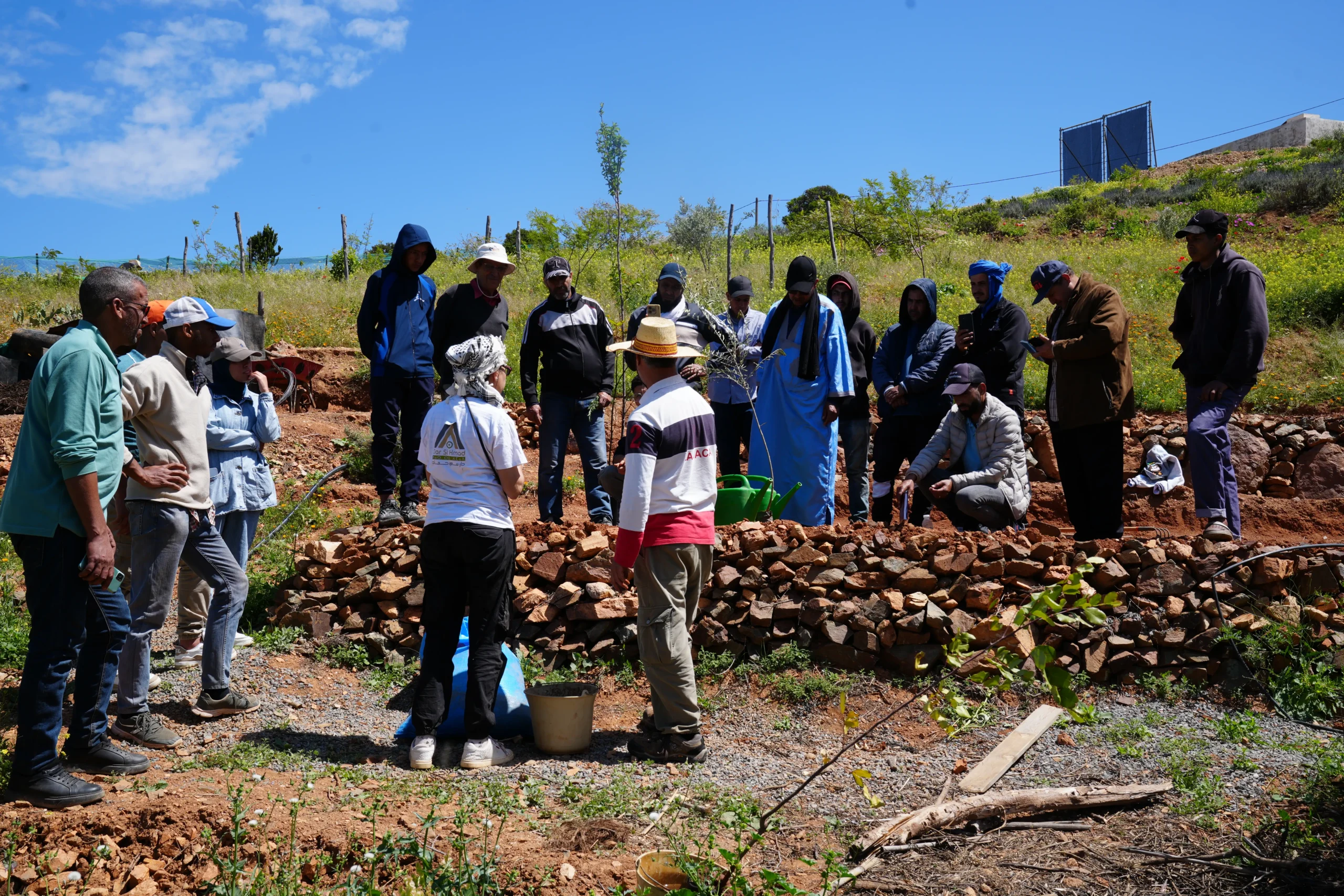
Through workshops and training, adults learn by bringing knowledge into practice. Farmers, community members, trainers and practitioners encounter new ideas, test them, adapt them and bring their own experience into the process.
We do not want knowledge to remain with the person who came to teach it. It must travel, meet other forms of knowledge, and find new meanings.
What matters is not deciding which knowledge is right, but creating the conditions for knowledge to circulate, encounter and evolve.
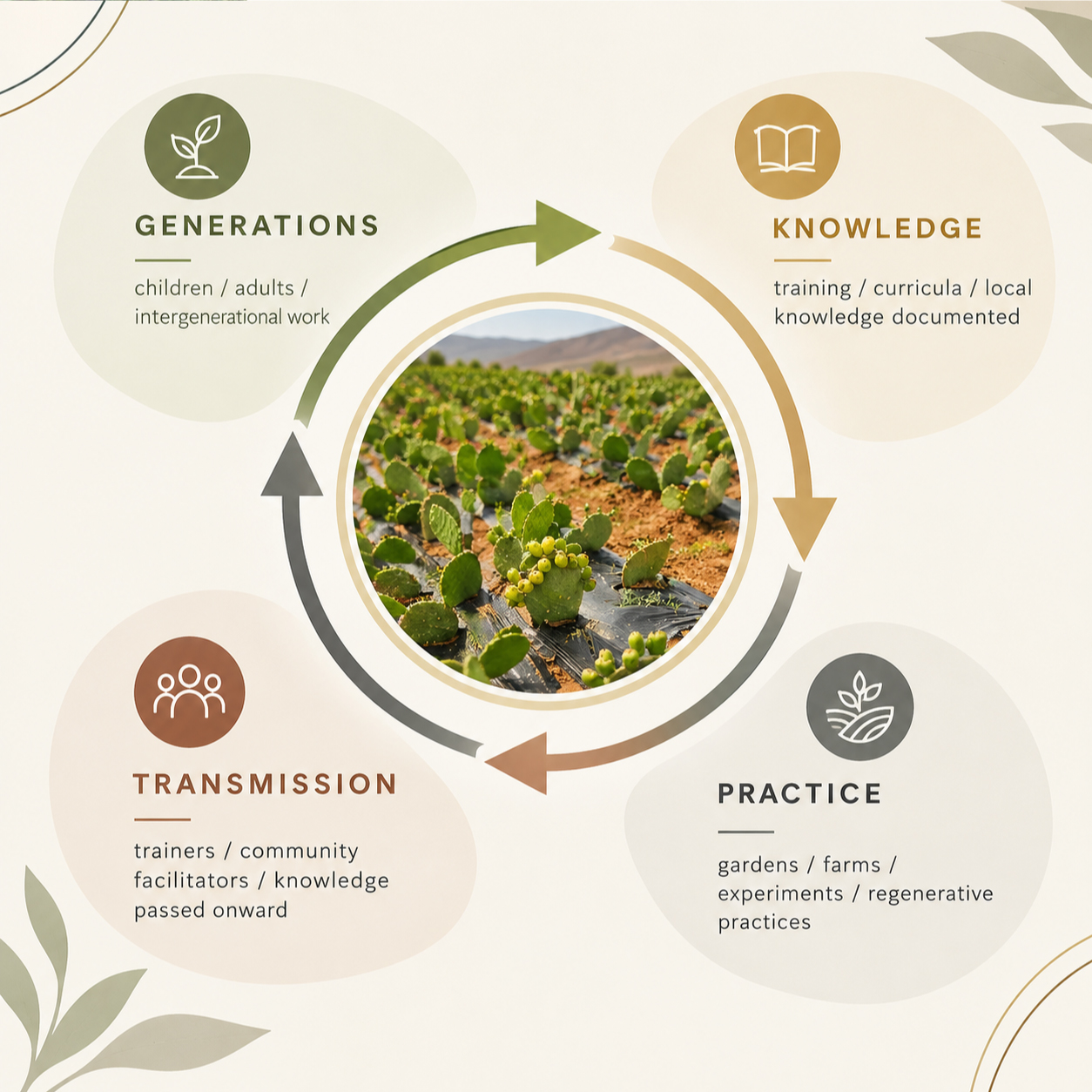
THE CIRCLE OF TRANSMISSION
Knowledge goes out into the territory and comes back changed.
Knowledge does not move in a straight line.
It moves between people, places and practices.
What is learned is taken into the field, the garden, the classroom and everyday life. There, it is tested, adapted and combined with experience.
And what comes back is no longer quite the same knowledge that went out.
Knowledge changes as it travels.
WHAT REMAINS?
What do we leave when we teach? What remains when the trainer leaves?
At Tinmel, we are interested in what happens after teaching is over.
When the trainer leaves, what remains? Not simply the knowledge that was shared, but what that knowledge has set in motion: a new way of looking, a question that continues to unfold, a practice that finds its place in everyday life, a confidence to try, to adapt, to teach someone else.
Perhaps what remains is not something that can be measured at all, but a change in the relationship between people, knowledge and the land.
Teaching, then, is not about leaving knowledge behind.
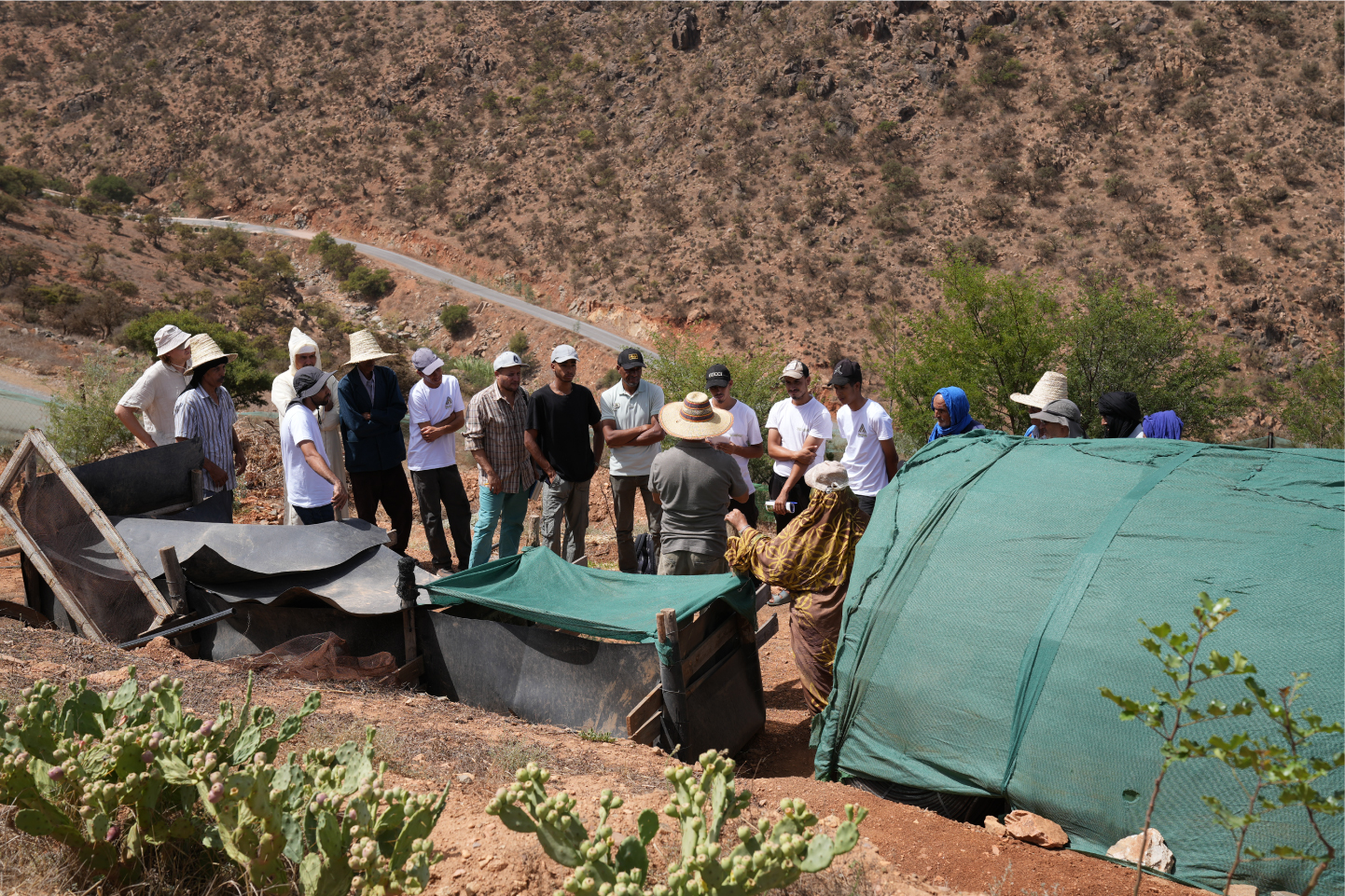
It is about setting something in motion that can continue without us.

The next lesson is already waiting in the landscape.
WHAT COMES NEXT
Knowledge is never finished.
The purpose of Tinmel is not to produce people who know more.
It is to create people who can observe, question, experiment, share and transmit.
Because the landscapes of the future will require knowledge that can move between generations, between experience and science, and between people and territory.
- → Water School
- → Agroecology & Regenerative Agriculture
- → Seeds & Knowledge Transmission
- → Gardens
- → Training & Community Learning
- → Research / Publications
Knowledge travels. And in travelling, it changes us — and the places we inhabit.